Low Ticket Funnel: What It Is and How to Build One in 7 Steps

Have you ever reviewed the numbers from your last launch and realized that your cost per lead increased—and the final results didn’t justify the weeks of preparation?
This scenario is becoming increasingly common. The traditional launch model no longer delivers the same results it did a few years ago—both due to rising paid media costs and the audience’s declining patience to wait weeks for your product cart to open.
That’s exactly why the Low Ticket Funnel has become a favorite among infopreneurs who want to convert cold traffic into buyers every single day—without relying on:
Launch dates
Massive lead lists
In this guide, you’ll learn how to build your own Low Ticket Funnel—plus something rarely explored: the role of video sales letters and player optimization as conversion drivers.
What is a Low Ticket Funnel (and why it’s attracting infopreneurs)
A Low Ticket Funnel is an automated sales structure that offers a low-cost digital product as the entry point to your ecosystem. These products typically range from $7 to $47 (USD equivalent).
The logic is simple: instead of asking a stranger to invest $500 or more in a full course right away, you offer something affordable that solves a specific problem.
The price is low enough to encourage an almost impulsive buying decision—but high enough to qualify the lead as someone willing to pay.
This model is also known as an SLO (Self-Liquidating Offer): an entry-level product designed to cover your lead acquisition cost.
The difference between a free lead and a $15 buyer is huge. The probability of selling to an existing customer is 60–70%, while for a new prospect it’s at most 20% (Invesp).
See how the Low Ticket Funnel compares to the High Ticket Funnel:
Feature | Low Ticket Funnel | High Ticket Funnel |
Price range | $7 to $47 | $200 to $2,000+ |
Buying decision | Fast, impulsive | Long, rational |
Traffic type | Cold audience (ads) | Warm audience (list, content) |
Sales volume | High | Low |
Copy complexity | Medium (short VSL) | High (webinars, calls, long sequences) |
Automation | Fully automated (runs 24/7) | Partial (requires human interaction) |
Main goal | Acquire buyers and fund traffic | Generate primary revenue |
The Low Ticket Funnel within the value ladder
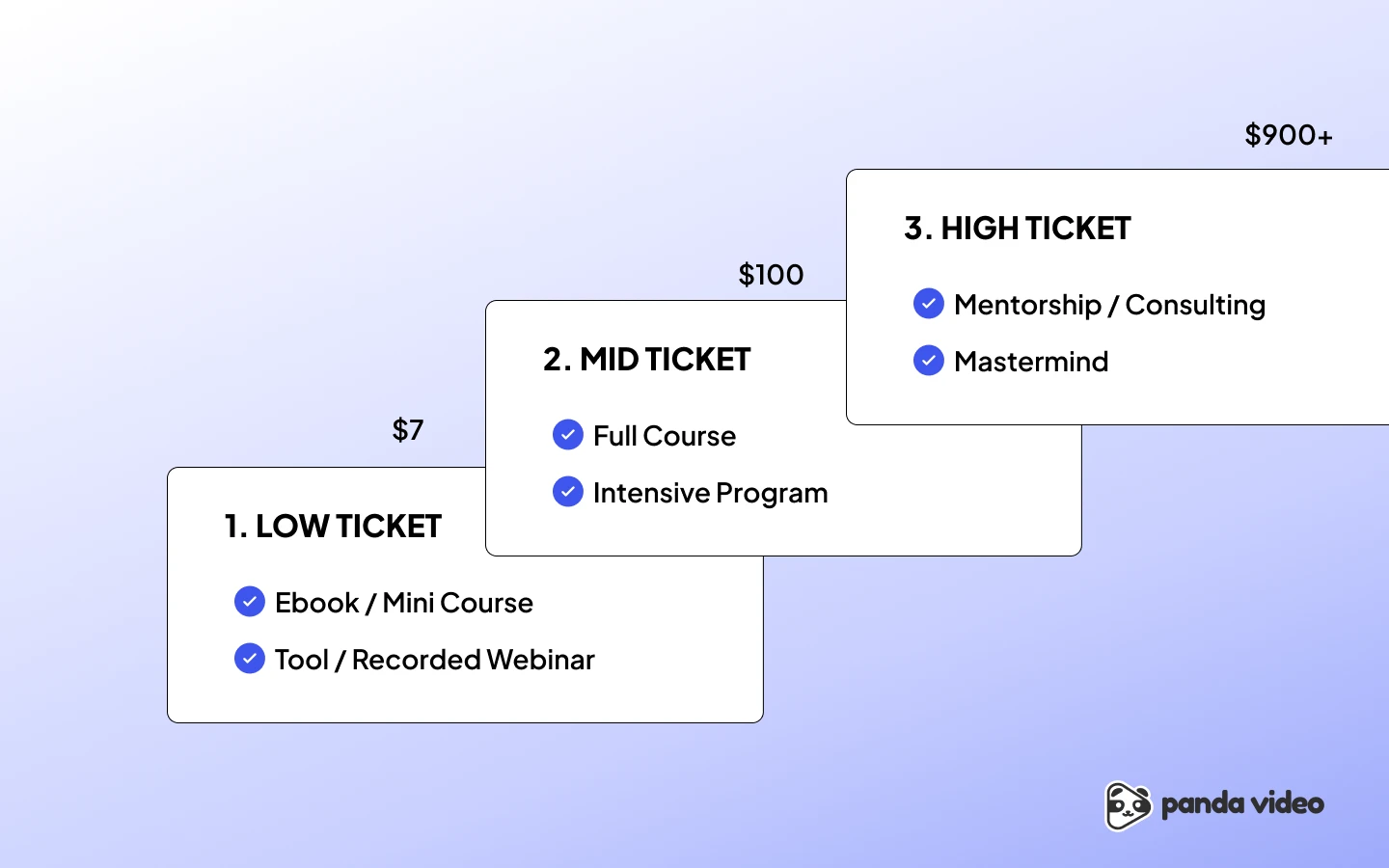
The low ticket offer is never the final destination. It’s the entry point to your value ladder—a progressive path where each product prepares the customer for the next.
In practice, it works like this:
Low ticket ($10–$47): ebook, mini course, tool, recorded workshop. Solves a specific and urgent problem
Mid ticket ($50–$100): full course, intensive program. Deepens the transformation
High ticket ($1000+): mentorship, consulting, mastermind. Offers personalized support
Recurring ($10–$40/month): community, subscription, membership. Generates predictable revenue
The Low Ticket Funnel turns strangers into buyers. The value ladder turns buyers into high-value customers.
The complete structure of a high-converting Low Ticket Funnel
A functional Low Ticket Funnel has five stages, each playing a specific role in the buyer’s journey.
Traffic: how to attract cold audiences
The fuel of a Low Ticket Funnel is paid traffic—mainly through Meta Ads (Facebook and Instagram) and Google Ads. Unlike launches, you don’t need a pre-built audience: the ad itself brings strangers directly to your sales page.
The best-performing creatives for low ticket offers are short videos (30 to 60 seconds) with a strong hook in the first 3 seconds, followed by a clear promise and a direct CTA. Carousels and UGC also perform well, especially on Instagram.
To get started, a daily budget of $5 to $10 is enough to validate your funnel.
Key metrics to track:
CPL (cost per lead)
CPA (cost per acquisition)
CTR (click-through rate)
Sales page: where conversion happens
The sales page is the heart of the funnel. This is where the visitor decides whether to buy or leave.
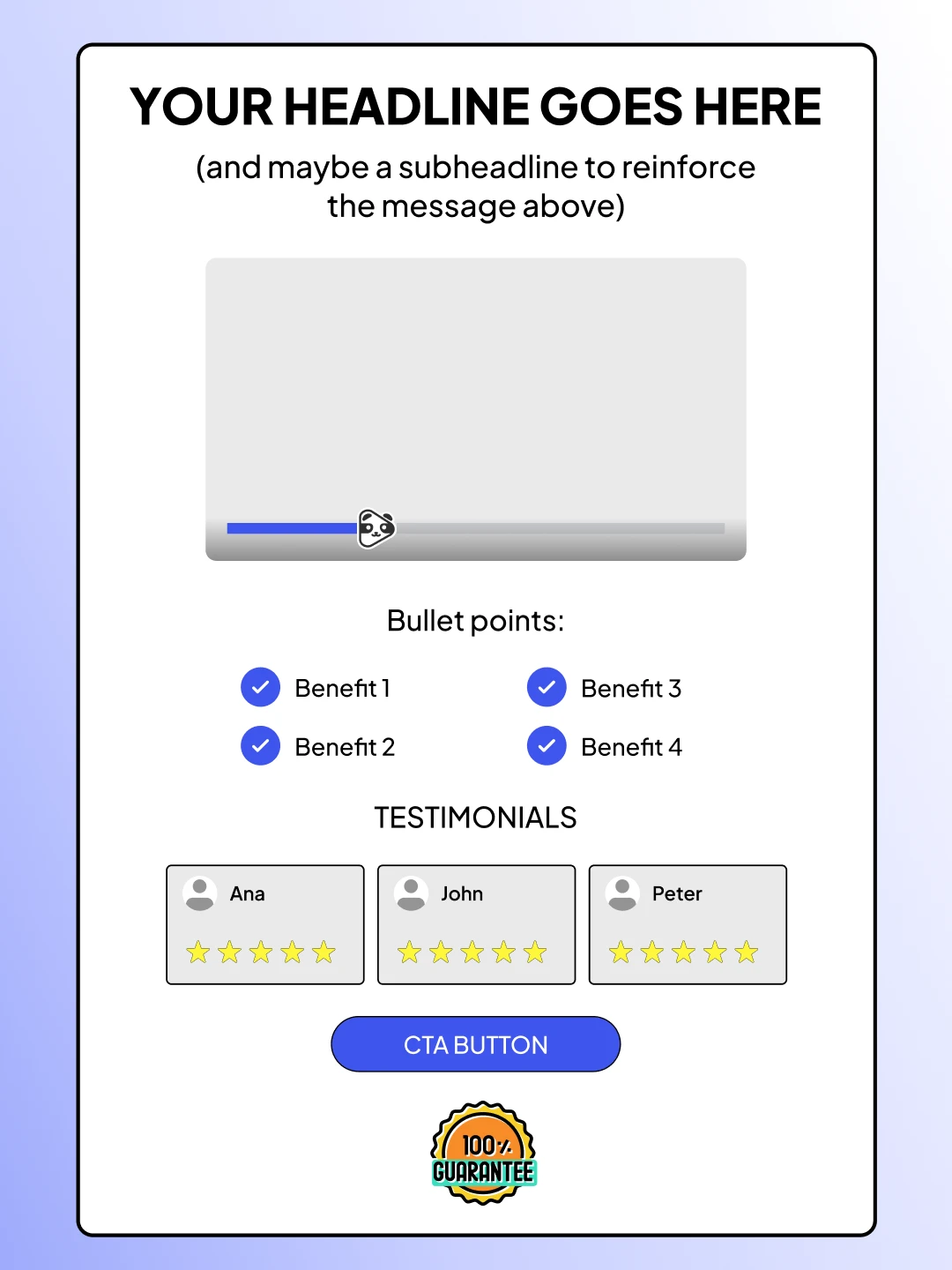
For low ticket offers, the page should be clean—with no navigation menu or distractions. A high-converting landing page typically includes:
A VSL (Video Sales Letter) as the central element
Bullet points highlighting key benefits
Social proof
Guarantee
Purchase button
Data from Firework shows that sales pages with video can achieve up to 86% higher conversion rates than text-only pages.
For a $5–$10 product—where the visitor needs to make a quick decision—video is the format that best combines persuasion and speed.
Read also: Click-through rate on videos: 7 factors that impact CTR (and your conversions)
Checkout with order bump: the secret to increasing average order value
An order bump is a complementary offer displayed inside the checkout page, usually as a checkbox like: “Yes, I want to add this for an extra $10.”
This feature is powerful because the buyer already has their credit card in hand. The decision barrier is minimal. A well-placed order bump can increase your average order value by 20% to 40%—with no additional traffic cost.
Examples of effective order bumps:
Main purchase is an ebook → order bump is an editable template
Main purchase is a mini course → order bump is a bonus lesson with a checklist
Main purchase is a recorded workshop → order bump is 30-day access to a community
Upsells and downsells: the post-purchase value ladder
Right after the purchase, the customer is redirected to an upsell page: a higher-value offer presented as a natural complement to what they just bought.
If the customer declines the upsell, they can be redirected to a downsell—a more affordable or simplified version of the same offer.
The ideal sequence looks like this:
Low ticket purchase ($17)
Upsell 1 ($20–$40) — full course or expanded package
Downsell ($10–$15) — simplified version of the upsell
Upsell 2 ($40–$100) — group mentorship or intensive program
The goal isn’t to profit from the front-end (the low ticket product itself), but to maximize revenue per buyer through upsells. That’s how the funnel becomes profitable—even with higher CPAs.
Post-purchase automations: email and WhatsApp
Not every lead buys on the first visit. And not every buyer accepts the upsell immediately. That’s why automation is essential:
Abandoned cart recovery (email + WhatsApp within the first 24 hours)
Welcome sequence for buyers (delivery + activation)
Upsell email sequence (3 to 5 emails over the next 7 days)
Remarketing for visitors who didn’t convert
The role of video sales letters (VSL) in a Low Ticket Funnel
A VSL (Video Sales Letter) is a sales video structured to guide the viewer through a persuasive journey—from problem to solution, from doubt to purchase decision.
For low ticket products, a short VSL (between 5 and 15 minutes) is the ideal format. It outperforms long-form sales copy for three main reasons:
Speed: video communicates information faster than text—and in a low ticket funnel, the decision needs to be quick
Emotional connection: voice, facial expression, and pacing build trust in ways text alone cannot
Narrative control: unlike text pages (which users can skim), video guides the viewer through the exact sequence you designed
Research from HubSpot shows that 39% of marketers consider video the element that most impacts conversion on landing pages—ahead of images (35.6%) and written testimonials.
If you want to go deeper into this topic, check out our guide on how to improve your VSL results.
How the video player impacts conversion rates
The video player setup is just as important as the VSL content itself.
Think about it this way: if 1,000 people land on your sales page and only 40% watch your VSL until the pitch (where the offer is presented), you have 400 people seeing your CTA.
But if you increase that to 60%, that’s 600 people—a 50% increase in conversion opportunities without spending an extra dollar on traffic.
Video retention determines how many people reach your offer. And retention is directly influenced by player configuration.
Three features make a major difference:
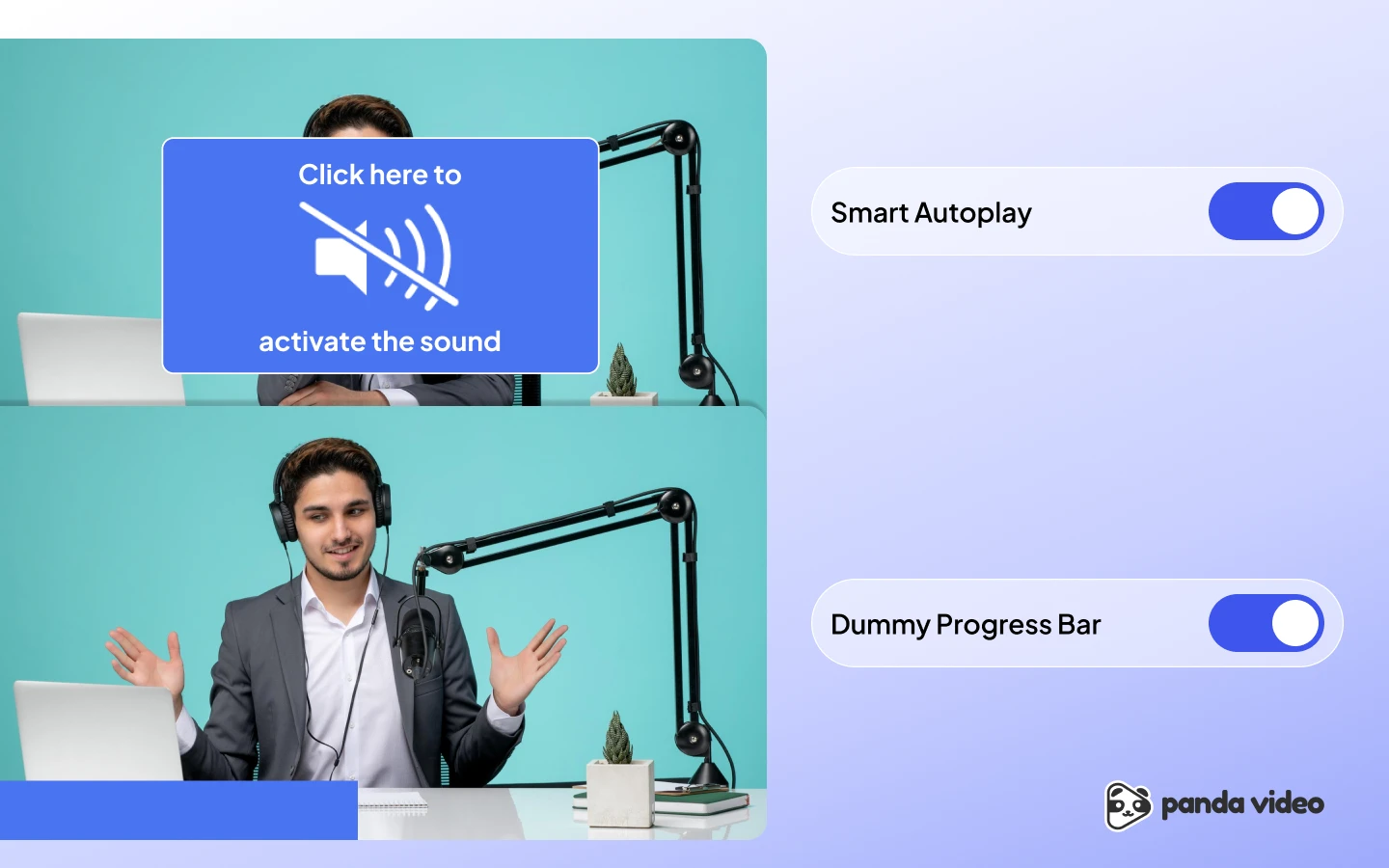
Smart Autoplay: the video starts automatically as soon as the visitor lands on the page—no need to click play. This removes the biggest friction point: inertia.
Custom Progress Bar (Perceived Progress): visually simulates a shorter video length, creating the perception that “it’s almost over.” This leverages a cognitive bias—people are more likely to finish something that appears close to completion.
Delayed CTA buttons: the purchase button appears at the exact moment the offer is introduced in the VSL, synchronized with the script. Showing it too early distracts. Showing it too late kills momentum.
Pause thumbnails: reduce drop-offs by displaying a strategic pause screen. You can add a persuasive message like “this is your only chance to watch this video,” encouraging viewers to stay until the end.
Read also: Direct Response: how to sell to people who don’t know you
How to build your Low Ticket Funnel in 7 steps
Theory matters—but execution is what drives results. Here’s a practical step-by-step to build your first Low Ticket Funnel.
Step 1: Choose an urgent problem and create the product
Your low ticket product must solve a specific, urgent, and painful problem. This is not a broad “everything about X” course—it’s a focused solution.
Formats that work well:
Mini video course (3 to 5 short lessons) — ideal if you already have recorded content
Ebook or practical guide — quick to produce, easy to consume
Template or tool — spreadsheets, scripts, ready-to-use assets
Recorded workshop — repurpose a live session
The most common entry price in the market ranges from $5 to $10. Below that, perceived value drops. Above $15, the decision becomes less impulsive.
Step 2: Record your VSL
You don’t need a professional studio. A smartphone with a good camera, natural lighting (or a ring light), and a well-structured script are enough.
Another option: slide-based VSL with voiceover. This works extremely well for low ticket funnels since the focus is on the message, not production quality. Use clean slides in Canva or PowerPoint, record your voice with a lavalier mic, and edit using tools like CapCut.
The most important factor is the script—and keeping the video between 5 and 12 minutes.
Step 3: Build your sales page
Use tools like WordPress, Elementor, or your checkout platform’s native builder.
The page structure is simple:
Headline above the video (reinforces the VSL hook)
Video player in the main position, above the fold
Benefit-driven bullet points below the video
Short testimonials (text or WhatsApp screenshots)
Guarantee (7 days is the standard)
Purchase button
For the video player setup: enable Smart Autoplay, activate the Custom Progress Bar, and hide forward/skip controls.
Step 4: Set up checkout, order bump, and upsells
In your checkout platform, configure:
Main product with your chosen price
1 order bump ($3–$7) — relevant complementary offer
1 upsell ($20–$40) — next step in your value ladder
1 downsell ($10–$15) — simplified version of the upsell for those who decline
Step 5: Set up paid traffic
Start with $5 to $10 per day on Meta Ads. Use this structure:
Conversion campaign optimized for purchases (not clicks)
Creatives: 30–60s videos with a strong hook, captions, and vertical format (9:16 for Reels/Stories)
Targeting: interests related to your niche + lookalike audiences (once you have data)
Tip: Don’t scale before reaching at least 50 conversions—this allows the pixel to learn and optimize performance.
Step 6: Activate post-purchase automations
At minimum, set up:
Instant delivery email (with product access)
Cart recovery sequence (3 emails within 24h for users who didn’t complete checkout)
Upsell email sequence (3 to 5 emails over 7 days promoting the next offer)
WhatsApp recovery for abandoned carts (if volume justifies it)
Step 7: Analyze metrics and optimize
The key KPIs for a Low Ticket Funnel are:
CPA (cost per acquisition)
Conversion rate (visitors → buyers)
Order bump take rate (target: 15–30%)
Upsell take rate (target: 5–15%)
Average order value (AOV)
ROAS (return on ad spend)
Your funnel becomes profitable when your revenue per buyer (AOV including bumps and upsells) is higher than your CPA.
Even if your $5 product doesn’t cover ad costs, upsells are what make the funnel work.
One of the most impactful tests you can run is A/B testing your VSL—different intros, lengths, or player configurations. In many cases, a simple change in the first 10 seconds can significantly impact retention and overall funnel conversion.
Read also: A/B testing for videos: how to optimize your VSL performance
5 mistakes that destroy Low Ticket Funnels
Mistake 1: A generic product that doesn’t solve an urgent problem
“Complete digital marketing guide” is not a low ticket offer.
“5 ad templates that convert for infopreneurs” is.
The more specific the problem, the more impulsive the purchase.
Mistake 2: A VSL that’s too long or lacks a strong hook
If the visitor doesn’t connect immediately, they leave.
For low ticket funnels, less is more: get straight to the point, keep it between 7–12 minutes, and open with a line that makes the viewer think, “this is about me.”
Mistake 3: No order bump or upsell
Relying only on the low ticket sale is rarely enough to cover traffic costs.
Order bumps and upsells are what turn your funnel into a profitable machine.
Mistake 4: Ignoring video retention and player optimization
If you don’t know where viewers drop off in your VSL, you’re flying blind.
Video retention is the metric that connects traffic to conversion—and small adjustments here generate the biggest gains.
Mistake 5: Scaling before validating the funnel
Spending more on traffic before proving that every $1 returns $1.50 is the fastest way to lose money.
Optimize first—then scale.
Use a Low Ticket Funnel to turn cold traffic into buyers
The model is simple in theory but requires disciplined execution: a product that solves a real problem, a funnel supported by upsells that make the math work, and paid traffic to feed the system.
But what separates stagnant funnels from scalable ones lies in the VSL—and in how your video player is configured.
If you’re building a Low Ticket Funnel and want your VSL to convert better, try Panda Video’s player for free.
With our video hosting platform, you have the tools to turn views into revenue. Start your free trial now.
Frequently asked questions about Low Ticket Funnels
What is a Low Ticket Funnel?
It’s an automated sales structure that offers a low-cost digital product to convert cold traffic into buyers, fund paid traffic, and initiate a value ladder.
What’s the ideal price for a low ticket product?
The most common range is $10 to $47. It’s low enough for impulse decisions and high enough to qualify the lead.
Does low ticket mean low quality?
No. The product must deliver real value. It’s the first impression of your brand—if it disappoints, customers won’t move to the next offer.
What’s the difference between low ticket and high ticket?
Low ticket is sold at high volume to cold audiences with quick decisions. High ticket is sold at lower volume to warm audiences with longer, more complex decision processes.
Can a Low Ticket Funnel run on autopilot?
Yes—that’s one of its biggest advantages. Once validated, the funnel can run 24/7 with paid traffic, without relying on launches or live events.